Most contract roles have a defined scope: cover for someone, deliver what's needed, hand off cleanly. My time at Alto Pharmacy didn't stay that narrow. Brought in to cover their sole brand designer during maternity leave, I was kept on when she returned, and the two of us worked in tandem while the company prepared for a complete rebrand to Fuze Health. What started as a fill-in role became something more layered: keep the brand running, learn it deeply enough to be useful, and help set up the transition that was coming.
⚡ Case Study at a Glance
Role: Brand Designer
Maintain brand consistency across social and print during an active transition period
Develop a working fluency with Alto's visual identity through hands-on creation
Shift approach strategically as the rebrand timeline solidified, redirecting effort toward transition work
Support operational needs across brick-and-mortar pharmacy locations
The Challenge
Alto had a well-established visual identity and a deep library of existing assets. The challenge was knowing how to work within a brand that already had a voice, at a moment when that voice was preparing to change completely.
The business context added complexity. With the rebrand to Fuze Health in planning, creative resources had to be allocated with intention. Work that leaned too heavily on net-new creation was time that couldn't be redirected toward the transition. But brand consistency couldn't slip in the meantime. Alto still had an audience showing up every day, expecting the same quality they'd come to recognize.
My Role & Approach
I joined as a Brand Designer covering maternity leave for Alto's sole brand designer. When she returned, I stayed on and we worked in parallel through the transition period.
My onboarding approach was deliberate. Alto had an extensive illustration library, but rather than going straight to remixing existing assets, I created net-new illustrations first. This wasn't inefficiency. Building within the brand gave me something that reviewing a library alone can't: an actual intuition for what felt right, what felt off, and why. That working knowledge paid off later when the priorities shifted.
Once the rebrand timeline was confirmed, my approach changed. I shifted to refreshing and remixing existing assets, keeping content feeling current for audiences without investing creative resources in work that would eventually sunset. This freed up bandwidth for the operational and transition-planning work that actually needed it.
The Work
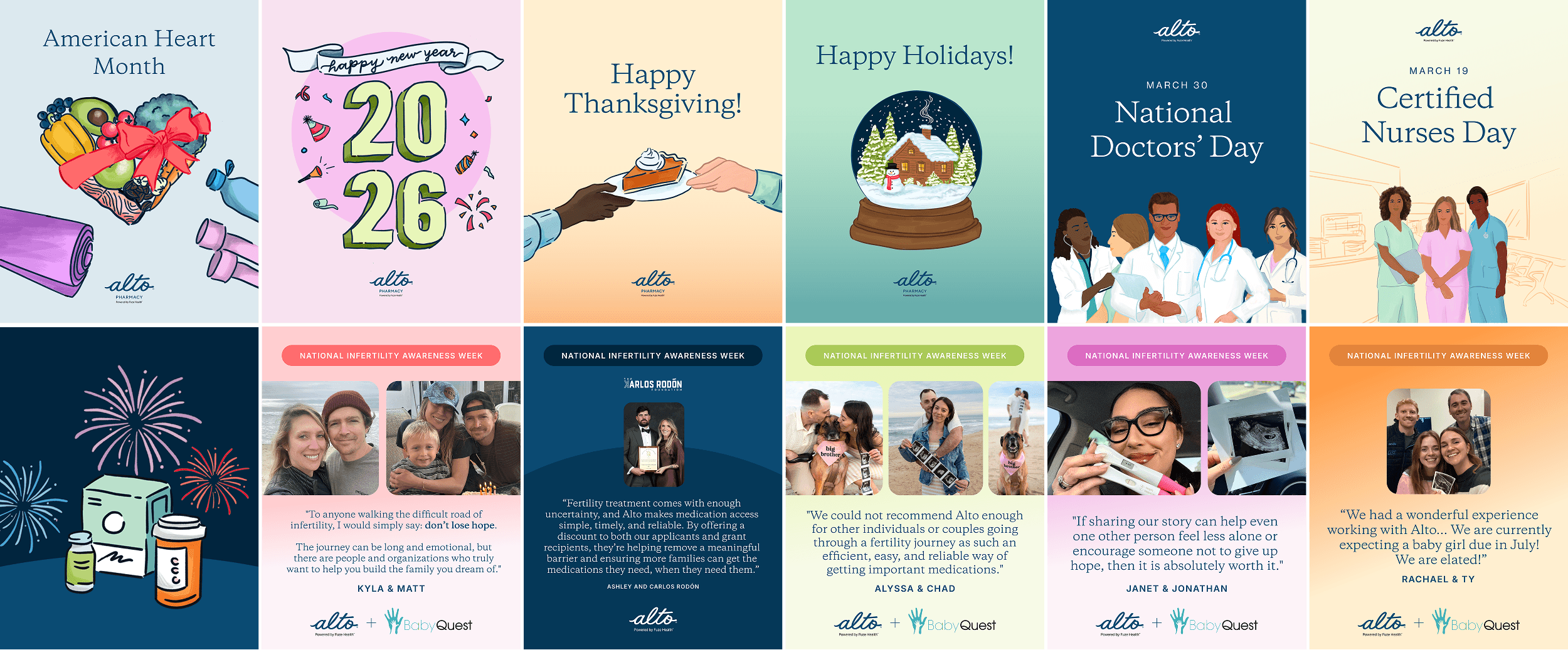
Social Media Illustrations
During the onboarding period, I created net-new illustrations for Alto's social media presence and broader brand needs. Even with a deep library available, starting with original work was the right call. It built a fluency with the brand that remixing alone wouldn't have given me, and that fluency made every subsequent decision faster.
As the rebrand timeline solidified, this shifted. I moved to refreshing existing illustrations with light updates, maintaining a consistent and polished social presence without overcreating. The goal was continuity for the audience, with efficiency on the back end.
Print Collateral and Operational Documents
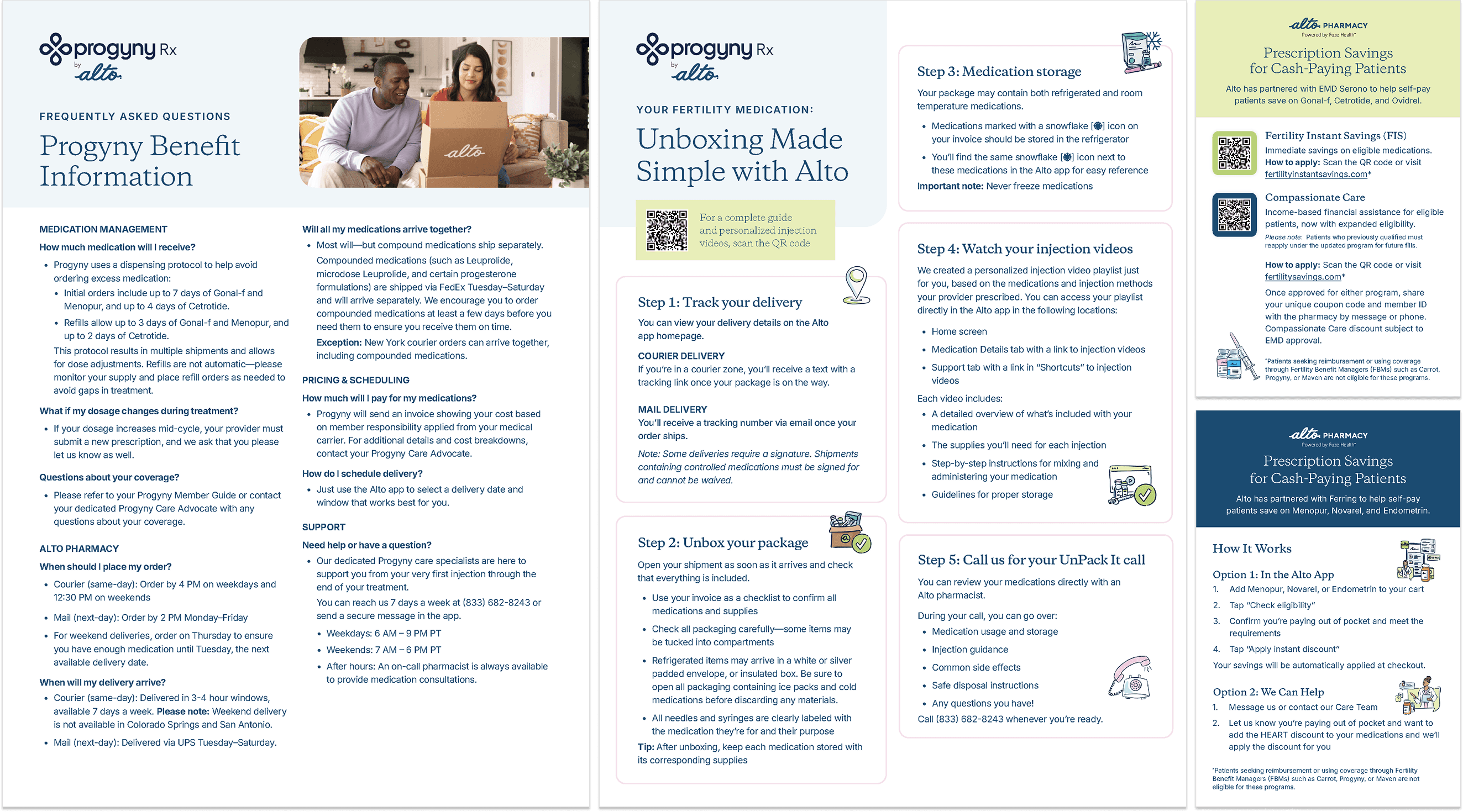
I designed print materials to support Alto's brick-and-mortar pharmacy operations, including documentation for new pharmacy locations and relocations. These materials aren't the most visible in a brand portfolio, but they carry real operational weight.
Pharmacy environments are high-pressure and time-compressed. The staff using these materials need the right information to be immediately readable, with supporting details easy to locate. Getting information hierarchy right in that context is a design problem with direct operational stakes. Consistency across these materials is also what makes a brand feel coherent at its most functional level.
Key Takeaways
The Alto work reinforced something that doesn't always get explicit credit in brand portfolios: knowing when not to create is a skill. Recognizing when to remix and refresh rather than build from scratch, and redirecting creative energy toward higher-stakes work, is how brand design functions at a sustainable pace inside a transitioning company.
It also underscored the value of deliberate immersion early. Choosing to build from scratch during onboarding paid off months later. Having a real working knowledge of the brand, not just access to its files, made every subsequent decision more grounded.
The Work Continues
My work at Alto wasn't separate from what came next. As the company transitioned to Fuze Health, my role did too. The context I built at Alto, both the brand knowledge and the operational understanding, carried directly into what I'm building now.
See the Fuze Health Case Study
fuze health case study
contact
chrystal k. ulanday